Holistic Cat Grooming — A Kind, Preventative Approach
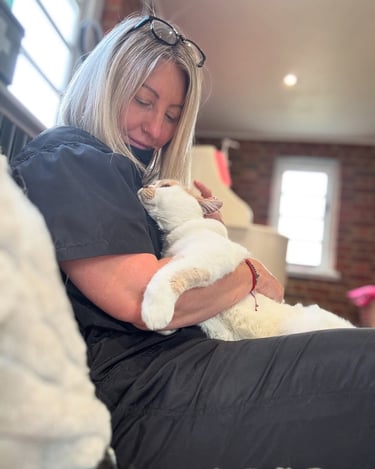
A descriptive guide to Preventative Grooming to help keep your Kitty looking tip top from Caroline at the Award Winning and Feline Focused Bentley & Bear Holistic Grooming.

Holistic Cat Grooming — A Kind, Preventative Approach
Cat grooming isn’t just about appearance — it’s about comfort, health, and emotional wellbeing. Many cats cope quietly with coat issues until they become too uncomfortable to ignore. By the time matting, dandruff, or a greasy, clumped coat is noticed, the grooming process can feel overwhelming for both cat and owner.
A more helpful way to think about grooming is as gentle, regular maintenance — done with your cat, not to them.
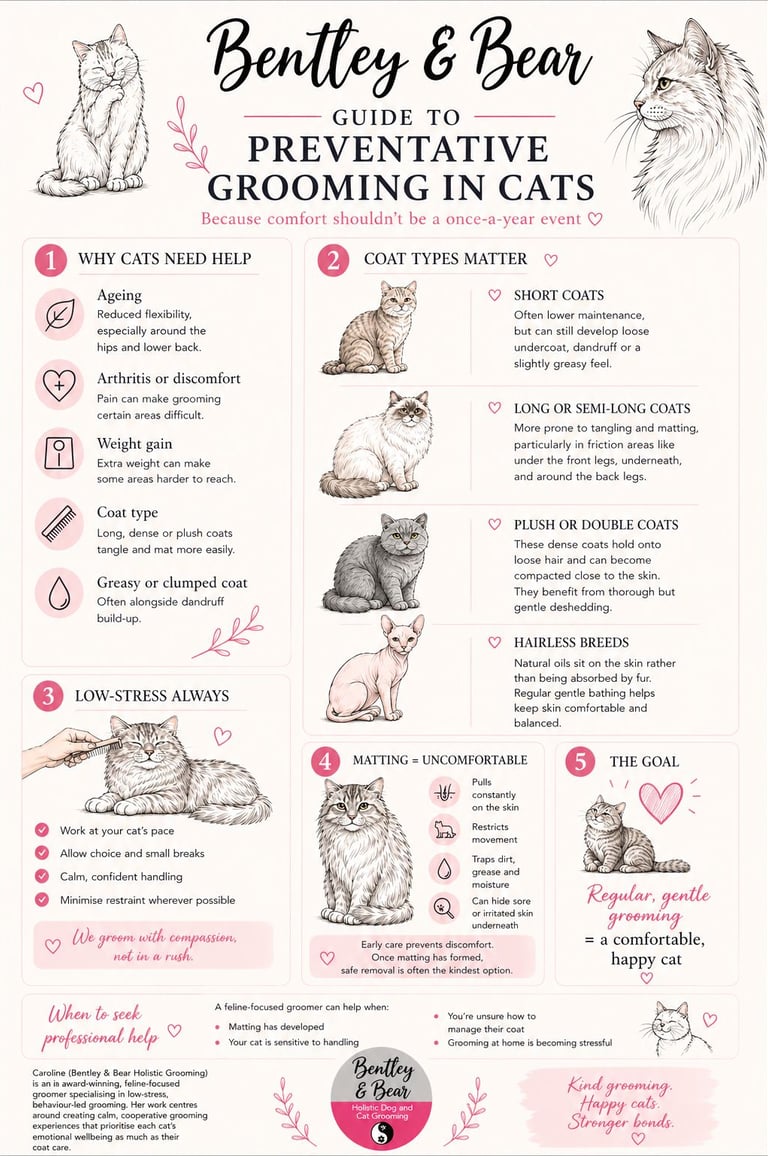
Why grooming matters (even for cats who “groom themselves”)
Cats are excellent self-groomers, but that doesn’t mean they don’t need support. Some common reasons cats struggle include:
* Ageing (reduced flexibility, especially around the hips and lower back)
* Arthritis or general discomfort
* Weight gain (making certain areas harder to reach)
* Coat type (long, dense, or plush coats tangle more easily)
* A greasy or clumped coat, often alongside dandruff build-up
When grooming slips, coats can quickly become compacted, knotted, or matted. These pull on the skin and can be uncomfortable even when your cat is resting.
Understanding different coat types
Not all coats behave the same — and grooming should reflect that.
Short Coats
Often lower maintenance, but can still develop loose undercoat, dandruff, or a slightly greasy feel. A gentle deshed or occasional bath can make a noticeable difference.
Long or Semi-Long Coats (e.g. Maine Coon, Ragdoll)
More prone to tangling and matting, particularly in friction areas like under the front legs, underneath, and around the back legs. Regular maintenance is key — prevention is far kinder than removal.
Plush or Double Coats (e.g. British Shorthair)
These dense coats can hold onto loose hair and become compacted close to the skin. They often benefit from thorough but gentle deshedding.
Hairless Breeds (e.g. Sphynx)
These cats still need grooming — just in a different way. Natural oils sit on the skin rather than being absorbed by fur, so regular gentle bathing helps keep the skin comfortable and balanced
A low-stress approach to grooming
How grooming is done matters just as much as what is done. Cats are highly sensitive to handling. If they feel restrained, rushed, or overwhelmed, they may try to escape, freeze, or defend themselves.
A low-stress, behaviour-aware approach focuses on:
* Working at the cat’s pace
* Allowing choice and small breaks
* Calm, confident handling
* Minimising restraint wherever possible
Techniques such as lap grooming, gentle towel wrapping, and slowly introducing new sensations can make a significant difference to how a cat experiences grooming.
Why matting should be avoided (not battled)
Matting isn’t just a cosmetic issue.
Mats:
* Pull constantly on the skin
* Restrict movement
* Trap dirt, grease, and moisture
* Can hide sore or irritated skin underneath
Trying to brush out tight matting is often uncomfortable and can damage the coat. In many cases, once matting has formed, safe removal is often the kindest option — followed by a plan to prevent it happening again.
Preventative grooming: the kindest option
The most positive grooming experiences happen when cats are:
* Seen regularly
* Handled gently and predictably
* Groomed before problems develop
This might include:
* Light deshedding
* Hygiene trims
* Gentle bathing where appropriate
* Introducing grooming gradually from a young age
Preventative grooming keeps sessions shorter, calmer, and far more comfortable.
When to seek professional help
A professional groomer experienced with cats can support when:
* Matting has developed
* Your cat is sensitive to handling
* You’re unsure how to manage their coat
* Grooming at home is becoming stressful
Look for someone who prioritises low-stress handling and an understanding of feline behaviour — not just the end result.
Final thoughts
Grooming doesn’t need to be a battle.
With the right approach, it can become a calm, manageable part of your cat’s routine — supporting both their physical comfort and emotional wellbeing. A well-groomed cat isn’t just one that looks good — it’s one that feels good too.
⸻
Author bio
Caroline (Bentley & Bear Holistic Grooming) is an award-winning, feline-focused groomer specialising in low-stress, behaviour-led grooming. Her work centres around creating calm, cooperative grooming experiences that prioritise each cat’s emotional wellbeing as much as their coat care.
For more information, see her Facebook Page here: Bentley & Bear Facebook Page
Try our Advice Page for quick hints to help your furry feline. Or drop us a question via our contact form on the 'Contact Us' page and we will try our best to get you answers.